By Carla Crowder, Appleseed Executive Director

Birmingham, Ala. — A little more justice slowly made its way into Alabama this week.

Roberto Cruz, a 71-year-old man who had been sentenced to die in prison for a case involving marijuana – that’s right, only marijuana – was resentenced to time served and will soon be released from Donaldson prison.

Mr. Cruz’s odyssey through the Alabama court system contains so many remarkable elements it’s hard to know where to start. In 2003, he was charged with drug trafficking when the vehicle he was a passenger in was pulled over in Warrior and police found 25 pounds of marijuana in the trunk.  The driver received a 3-year split sentence and was deported.  Mr. Cruz was sentenced to Life Without Parole.

Roberto Cruz was ensnared in a system that has some of the country’s harshest sentences and lowest weight thresholds for marijuana offenses, Jefferson County Judge Stephen Wallace found, when he resentenced Mr. Cruz to time served.

The State’s primary evidence, according to Jefferson County Circuit Judge Stephen Wallace’s order: “[C]ircumstantial evidence suggesting that since the defendant was a passenger in the vehicle and marijuana has a strong odor, then he must have known about the drugs.”

At trial in 2005, Mr. Cruz’s attorney offered no mitigating evidence nor objection to the State’s use of prior convictions from 1985 to enhance his sentence under the Habitual Felony Offender Act. It took almost 16 years for the Alabama justice system to correct this error. Turns out, the State was not permitted to use those old convictions, all of which were drug crimes stemming from a single incident in Georgia.  Well-established Alabama case law excludes drug convictions prior to 1987 for use in HFOA sentencing because drug crimes had their own recidivist statute until then. But no one in Judge Gloria Bahakel’s Jefferson County courtroom 15 years ago could be bothered to point that out.

The story of how this error got corrected speaks volumes about the frailties in Alabama’s justice system and the harm done to defendants without access to money. The Alabama Court of Criminal Appeals affirmed the conviction and sentence.  Incarcerated and without the benefit of counsel, Mr. Cruz filed post-conviction petitions that went nowhere. Then investigators with the Southern Poverty Law Center discovered his case while researching marijuana trafficking cases. They put Mr. Cruz’s plight on the radar of Jefferson County Public Defender Adam Danneman, who vigorously took on the case.

Judge Wallace’s order, most importantly, provides immediate release to a 71-year-old man who has no business at Donaldson prison. But it goes further in pointing out the “disturbing” reality that Alabama is still sending people to prison forever for marijuana, a substance legal in 11 states, and decriminalized in 16 more. “Commercial distribution of cannabis is allowed in all jurisdictions where it has been legalized, except for Vermont and the District of Columbia,” he wrote.  Even in the surrounding southern states of Georgia, Florida, and Tennessee, Alabama’s weight threshold for a trafficking conviction – greater than 2.2 pounds – is way out of line.

“Judge Wallace’s order hits the nail on the head. We have the lowest thresholds and the harshest punishments in the country for marijuana in this state,” Mr. Danneman told me. “Regardless of how you feel about the legalization/decriminalization of weed, 15 plus years in prison is a shockingly harsh punishment. I’m glad we were able to do something about it.”

Appleseed and the Southern Poverty Law Center focused on Alabama’s harsh marijuana laws in our report, Alabama’s War on Marijuana: Accessing the Fiscal and Human Toll of Criminalization. We found that marijuana enforcement costs Alabama taxpayers $22 million per year, a cost worth examining given the enormous state budget shortfalls anticipated by the COVID-related economic downturn and court closures.

The human costs are much worse.

In leaving prison as an older person once sentenced to die there, Mr. Cruz is in good company.  Within the last year, 72-year-old Geneva Cooley and 58-year-old Alvin Kennard have walked free, in large part because of Jefferson County judges and prosecutors who were unafraid to take a second look at how the mistakes of our past are wasting lives and hurting people.  Like Mr. Cruz, Ms. Cooley’s LWOP sentence was for drug trafficking.

Mr. Kennard at his Bessemer home a few months after his release from prison. Photo by Bernard Troncale

Mr. Kennard was my client and I still see him on a regular basis. Within 6 weeks of release, he secured a job at a car dealership. He talks about going to work like it’s the best thing that ever happened to him. Work, family, and church are his priorities.  In fact, Mr. Kennard and Bessemer District Attorney Lynniece Washington attend the same church. And she is fine with that, she once told me. After all, she saw no purpose in opposing Mr. Kennard’s resentencing. He had served 36 years for a $50 robbery.

But there are so many more like them. According to data from the Alabama Sentencing Commission that Judge Wallace included in his order, 22 people in Alabama are serving sentences of Life Without Parole for drug convictions, 255 for robbery – all crimes that require no physical injury for a conviction.  But under Alabama’s Habitual Felony Offender Act, that does not matter.

More than 100 of these people are over 60 years old. As COVID-19 spreads through the Alabama Department of Corrections, with now 25 confirmed cases among staff and incarcerated people, the potential consequences of these sentencing decisions become more fraught.

We celebrate with Roberto Cruz. And still we search for the ways Alabama’s criminal punishment system will somehow provide justice to the many others like him.

For a full account of Mr. Cruz’s case, please read Kathryn Casteel’s detailed report from the Southern Poverty Law Center.

By Akiesha Anderson, Appleseed Policy Director

On March 30th, Alabama Appleseed sent a letter to Dr. Scott Harris—Director of the Alabama Department of Public Health (ADPH), and Brian Hastings—Director of the Alabama Department of Emergency Management (ADEM), urging their agencies to share with Appleseed and the general public their plans to ensure that COVID-19 testing sites would be set up in every county throughout the Black Belt.

What factors motivated the decision to send this letter?

The answer for this is simple, I care about the plights and difficulties that affect us, as a community and society.

It is very well understood that we are all navigating the struggles associated with combating COVID-19  as a society. In the recent weeks, there have been national, state, and local conversations about the disproportionate impact that COVID-19 has had on Black communities with the understanding that this is tied into inequality in our health care system. Although these conversations about how racism and bias negatively impact how Black people in America receive access to healthcare are not new, they remain essential. It is also essential that as we have these conversations, we delve exploring the intersectionality of race, poverty, gender, and geography.

A farmer hauls hay in Lowndes County, one of the poorest counties in the nation. Photo Bernard Troncale

At the time the letter was sent, there were a total of 831 confirmed COVID-19 cases throughout the state, and the first case of COVID-19 had been confirmed in Alabama only 10 days prior. While it was admirable to see that within 10 days the state was able to test nearly 1000 Alabamians, it was concerning to know that although 13% of all tests had resulted in a positive case, less than 1% of those positive cases were found in the Black Belt.

According to 2019 Census data, residents of the Black Belt counties make up 11% of Alabama’s population. Census data also reveals that the Black Belt has a higher percentage of both Black and poor residents that the statewide average. Given reports of testing shortages generally, the limited information gleaned from ADPH data, historical context, and the demographics of the Black Belt, it seemed unlikely at the time, that the state was disseminating the same resources to the Black Belt as they were other communities.

What did we learn in the weeks immediately after sending the letter?

Within just a few hours of receiving our letter, Director Hastings shared that it was his belief that plans were in place to expand testing throughout the Black Belt. This sentiment was repeated by elected officials and leaders throughout the coming weeks, as I continued to inquire about when testing sites would expand throughout the region. In lieu of permanent testing sites, many Black Belt counties have relied on mobile testing sites in an effort to increase testing. Over the past weeks, several Black Belt counties set-up these mobile sites at the County Health Departments.

In early April, ADPH employees revealed that there was no clear plan with regard to how often any of the mobile sites would return to each county. In Wilcox County, for example, an employee at the County Health Department shared with me that they were unsure whether the mobile testing sites would be returning every week or on a case-by-case basis. However, the employee feared it would be the latter.

In addition to barriers to testing created by such infrequencies, testing within these counties was seemingly somewhat inaccessible to Black Belt residents for several other reasons. For example, due to the limited amount of tests distributed throughout the state, health departments within the Black Belt indicated that they were using specific and narrow criteria to pre-screen patients beforehand to determine who could receive testing. Specifically, the county health departments reportedly were only testing people that BOTH (a) had a doctor’s referral and (b) met the following criteria: (1) were symptomatic with a fever, cough, shortness of breath AND were either (1) 65 or older, (2) a health care worker, or (3) someone with an underlying health condition that makes them immunocompromised/at higher risk.

These criteria were troubling for numerous reasons. While this criteria might have seemed normal and like an appropriate way to determine how to prioritize the allocation of limited resources/tests, such criteria essentially meant that many Black Belt residents would be considered ineligible for testing at the State Department of Health sites. Worth noting first, this criteria was stricter than the criteria outlined on the ADPH website. That suggests that as a matter of unofficial policy implementation, Black Belt residents might have had a harder time accessing tests than members of other communities throughout the state.  Secondly, as previously discussed, there are a number of characteristics unique to rural, Black Belt, and poor communities that likely made these criteria more harmful than helpful. For example, considering the historic disinvestment in rural and Black Belt counties it is possible that Black Belt residents are less likely to have access to a doctor that is able to give them a referral. Also, for those who  do have access to a doctor, research has long shown how racism and bias plays out in the healthcare system, so minority and poor people are also at the mercy of whether or not a doctor even believes them or finds them credible or worthy enough of receiving an exam. Similarly, due to healthcare shortages and vulnerabilities that have existed long before COVID, it is also likely that members of Black Belt communities may have undiagnosed health  conditions that they are unaware of simply because they don’t have the same access to healthcare professionals as members of other communities do.

Has testing in the Black Belt improved in the past month?

Although the Black Belt still lacks permanent testing sites within eight of its ten counties, in the month since Appleseed wrote to Dr. Harris, testing capacity and rates have risen. Within the last two weeks for example, testing of Black Belt residents has nearly doubled—as tests administered to Black Belt residents rose from a total of 4645 on April 21st to a total of 8362 on May 1st. Despite the fact that testing throughout the state of Alabama remains low—less than 2% of the state’s population has been tested— testing amongst Black Belt residents is beginning to reach parity with State-wide rates, have gotten closer to reaching parity with statewide rates. As of May 1st, approximately 1.5% of the Black Belt has been tested for COVID-19. However, as Black Belt testing increases, we are beginning to witness the opposite problem of what was seen weeks ago, when Black Belt residents seemed to be underrepresented when assessing positive test results. In contrast, as testing increases, we are beginning to witness Black Belt residents are becoming overrepresented with regard to positive test results. Although Black Belt residents make up 11% of Alabama’s population, they now make up 16% of the COVID-19 positive test results.

What does this increase in positive COVID-19 cases within the Black Belt reveal?

It is no secret that there have been numerous challenges that the state Department of Health and other state leaders have had to navigate since the first coronavirus case was confirmed in Alabama. However, the recent rate at which new cases have been confirmed within the Black Belt suggests that the previously low number of confirmed cases likely resulted from simply a lack of testing rather than a lack of occurrences. Given this possibility along with the State’s decision to slowly reopen the state by rolling back both social distancing and business restrictions; it is possible that the state may not be able to increase testing in enough time to detect and prevent spread of existing COVID-19 cases in the area.

A 71-year-old farmer in Perry County, Alabama waiting on parts to fix a broke tractor. Photo Bernard Troncale

Something to Ponder

Every policy, action or inaction by a public official or governmental institutions is ultimately a decision that tells us something about what people, communities, and beneficiaries said actors both prioritize and deprioritize. Which communities get allocated resources, how quickly, and how many resources has long been deeply inequitable and oft-times exclusionary process. As leaders continue to make decisions about the allocation of resources during this epidemic, we should be vigilant to fight against the inequities that race, class, and nepotism can create. Because policy makers and public officials routinely sacrifice some people for the perceived “greater good” of others, we must continue to challenge who we allow decisionmakers to  deem as “disposable”.

Alabama Appleseed’s mission of justice and equity for all Alabamians compels us to do so. Given what’s at stake with this pandemic, this mission is more urgent that ever.

By Leah Nelson, Appleseed Research Director

MONTGOMERY, Ala. — When police pulled Reunca Lewis over near downtown Montgomery on April 17, the 23-year-old Montgomery resident was baffled. Lewis’s car had been stolen and then involved in a hit-and-run, and she had spent most of the day with police downtown, dealing with the aftermath. Now, the police officer who pulled her over was asking why her new vehicle didn’t have tags.

She showed him her registration and proof of insurance and explained she couldn’t get tags because the office that issues them is closed due to Covid-19. The officer issued a warning, then excused himself and called dispatch.

Suddenly, three more police vehicles swarmed up and parked behind her car. The officer re-approached, told her to exit the vehicle, and arrested her for having outstanding warrants because she had missed a March hearing regarding unpaid traffic tickets. Lewis’ sister-in-law, 20, who happened to be in the car with her, was arrested for the same reason. In the back of the car, Lewis’s six-year-old son wept in fear while Lewis’ mother rushed across town to pick up the car and take the child home. 

Lewis, who has three other children at home including medically fragile 11-month-old twins, wept too.

The officer took Lewis and her sister-in-law to Montgomery City Jail, where they spent three nights locked in a tiny cell with two other women, one of whom was coughing and begging for medical attention.

All of the women were terrified. One was there in connection with an altercation with a neighbor, but, said Lewis, the majority of them there in connection with unpaid traffic tickets.

On a normal Friday, that wouldn’t be surprising. Like all municipal jails in Alabama, Montgomery’s city jail holds people arrested for allegedly violating municipal ordinances or committing misdemeanors. Many people are held in jail after missing hearings in connection with unpaid traffic tickets – Lewis herself has spent time there twice before in connection with tickets she did not have money to pay. Most of the time, the city jail also holds a few dozen individuals awaiting trial in federal court, as well as a handful of people serving sentence of less than a year.

But Friday, April 17 was not a normal Friday. On that Friday, cases of Covid-19, the potentially fatal illness caused by the novel coronavirus, were spiking across the state of Alabama. With less than one percent of the population tested statewide, there were already 206 cases in Montgomery County alone, according to data published by the Alabama Department of Public Health. That same day, the Alabama Department of Corrections announced for the first time that Covid-19 was spreading through its inmate population, with three positive tests at two different facilities. And weeks earlier, the governor had granted municipalities like Montgomery permission to issue summonses instead of arresting people who, like Lewis and her sister-in-law, were accused of nonviolent offenses. According to the proclamation, the reason for this extraordinary action was “[b]ecause the conditions of jails inherently heighten the possibility of COVID-19 transmission.”

Despite these known risks, Lewis and her sister in law were taken to jail. There, she said, none of the women she was with had personal protective equipment like gloves or face masks. There was no hand sanitizer or hot water. The inmates who gave her her jumper, mat, and other supplies when she was booked were without supplies, as were the inmates who worked in the kitchen. She reports that officers checked inmates’ temperatures before booking them in, but that while she was there, a male inmate arrived with a fever and was booked in anyway. Corrections officers made some effort to separate new arrivals from inmates who had been in for a while, but took no meaningful steps to protect the new arrivals from each other, Lewis reported.

When Lewis finally got before a municipal judge on Monday via videoconference, he told her a new date would be set, but declined to provide her with a clearance letter to get her license back after it was suspended for failing to appear in court. Until it is returned to her, Lewis, who is at heightened risk of being pulled over until state offices reopen and she is able to get a tag for her vehicle, risks being ticketed again for driving with a suspended license.

As an African-American woman, she is also at heightened risk of contracting Covid-19: In Alabama, nearly 58 percent of cases have been women and nearly 38 percent have been African American, even though the population overall is about 50 percent female and 27 percent African American.

Lewis is aware of these risks, and she is terrified. “Are our lives or tickets more important to them? Like, this is a fatal virus,” she said. “People are dying. They had us in there for tickets.”

Update: This post was updated on April 30, 2020 to reflect new facts provided by the City of Montgomery regarding the date of the hearing Ms. Lewis missed.


My name is Akiesha Anderson and I am thrilled to join Appleseed! As Policy Director, my role will primarily focus on policy development, legislative advocacy, coalition building, engaging with public officials and assisting with legal projects.

Appleseed Policy Director Akiesha Anderson

As a Montgomery-native, I grew up very aware of the existence of both past and present social inequality and stratification. I received my bachelor’s degree from Alabama State University, where I chose to major in sociology because of my desire to better understand and analyze social problems. This area fascinated me and helped me recognized the continued power of social movements as well as the ways in which policies and laws can create, perpetuate, or dismantle modern-day caste systems. Studying sociology also helped me better understand many of the systemic barriers to social mobility that members of low-income and marginalized communities encounter. I later received a Master’s in Public Administration from AUM and my law degree (along with a Certificate in Government Affairs) from The University of Alabama.

Over the years, my passion for social justice, public service, and working towards effectuating meaningful societal change has taken me to some really amazing places! I’ve worked in Central America, Washington, D.C., and most recently—Los Angeles, CA. I’ve also had the honor of working with some really amazing civil rights organizations, elected officials, a university, and a think tank: the Southern Poverty Law Center (SPLC), National Center for Lesbian Rights (NCLR), Human Rights Campaign (HRC), U.S. Congresswoman Terri A. Sewell (Al-07), the Montgomery County Commission, UCLA School of Law, and the Williams Institute. In addition, I am a member of several service-oriented organizations including the Blackburn Institute and Alpha Kappa Alpha Sorority, Inc.

As I join Appleseed, I look forward to having the opportunity to build upon the legacy of the civil rights heroes and soldiers who came before me, and working towards making Alabama a more just and equitable state for all!

The following report is part of Appleseed’s collaboration with the Aspen Institute’s Financial Security Program and also appears on the Aspen Institute blog.


For many individuals and households, a $200 traffic ticket can devastate savings and finances. The Federal Reserve’s Report on the Economic Well-Being of U.S. Households finds that 40% of Americans wouldn’t be able to pull together $400 in cash without borrowing money or selling possessions, highlighting the impact fines and fees can have on financial security.

Faced with the need to raise revenue, state and municipal criminal justice systems are increasingly turning to government fines and fees to make up budget shortfalls. The practice of imposing fines, fees, court costs, and other debts onto residents has created a “two-tiered justice system” that disproportionately impacts low-income communities and communities of color – specifically African-American communities. Studies show that cities and communities with large African-American populations receive significantly more revenue from fines and exhibit harsher collection tactics than those without similar demographics.

In Alabama, thousands are trying to balance the costs of fines with other expenses and needs. A survey by the Alabama Appleseed Center for Law and Justice found that for those with outstanding court debts:

  • More than 80% cut back on basic needs like rent, food, medical bills, car payments, and child support just to pay down their debt
  • Almost 40% committed a crime to pay off their debt
  • 44% used payday or title loans to pay off their debt
  • Almost 50% shared that they thought they would never be able to pay off their debt

The penalties of an offense vary dramatically from location to location. In some jurisdictions, the consequence of not being able to pay a court fine or fee can be additional late fees – in other jurisdictions, jail time.
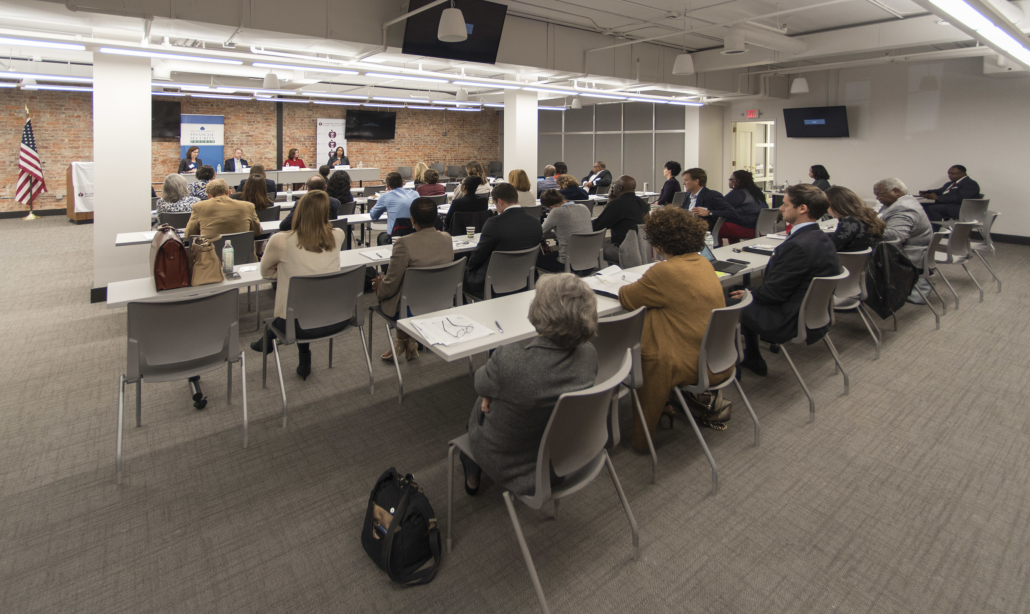
Appleseed and the Aspen Institute convened advocates, the legal community, government leaders, law enforcement, and directly impacted people for a convening on solutions to the fines and fees debt trap.
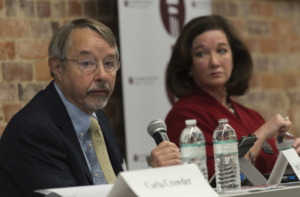
UAB Professor Emeritus Foster Cook and Jefferson County Circuit Judge Teresa Pulliam shared strategies for addressing the harm of fines and fees on low-income Alabamians during an event in October.

What is unfolding in Alabama is not unique to the state. Fines and fees are distressing the financial lives of families across the country. In North Carolina, over one million people have suspended drivers licenses for either a failure to pay traffic fines and fees or failure to appear in court. Forty-three states use driver’s licenses suspensions as punishment for failure to pay.

Suspending a driver’s license can further exacerbate people’s inability to pay.  In rural communities, driving might be the only means to get to work and generate the income required to repay debts.  When faced with the choice of driving on a suspended license or losing one’s job, how do we blame those who do drive? Often, a suspended driver’s license may not deter people from driving due to the importance of work to family income. However, driving without a license puts many at risk for further punishment. In NC, for example, driving without a license is a Class 3 misdemeanor.

recent investigation by the U.S. Department of Justice’s Civil Rights Division found that the conditions of men’s prisons in Alabama is in violation of the 8th Amendment of the Constitution, which protects people from excessive bail, excessive fines, and cruel and unusual punishment. The investigation has created state-wide urgency around the need to develop systemic solutions to instigate comprehensive criminal justice reform. Local stakeholders – government officials, employers, community leaders – are starting to pay attention and designing solutions to end this negative cycle. Restructuring court fines and fees is a necessary first step.

In October 2019, Alabama Appleseed, in partnership with the Aspen Institute Financial Security Program (Aspen FSP), convened a cross-sector group of local leaders to discuss and identify practical, promising solutions. Experts representing workforce development, district attorney’s offices, municipal and state government, the bar, and the judiciary, workshopped strategies for implementing local and state-wide solutions centered on three main goals: curtailing driver’s license suspensions, streamlining municipal court practices and policies, and strengthening data collection.

Alabama Appleseed and Aspen FSP have compiled a list of key recommendations to reduce the negative impacts of fines and fees on households and communities across the country.

  • Reimagine state funding

In Alabama, fines and fees serve as a hidden tax disproportionately borne by poor people and people of color to supplement the state’s low tax rates. The money collected is largely funneled into the state’s General Fund, government agencies, county and municipal funds, and used to finance pet projects. States should identify more equitable ways to fund essential functions and stop forcing the courts to serve as revenue collectors.

  • Share data between jurisdictions

Many Alabamians owe fines and fees in multiple jurisdictions, but when judges are assessing ability to pay and setting payment plans, they typically only know what the individual owes in their own court. As a result, some people are on payment plans of $25 or $50 in multiple jurisdictions. Better data collection and information-sharing between jurisdictions could prevent this type of unintentional burden and help judges more realistically assess the circumstances of the people who come before them. People are more likely to keep up with payment plans when those plans are reasonable, so better coordination may improve compliance as well.

  • Evaluate the broad impact on community

Individuals are not the only ones to suffer from burdensome court debt: the state pays too. When people lose their driver’s licenses, they can’t work. In an era of record low unemployment and a tight labor market, that means jobs cannot be filled despite the existence of eager workers. Everyone benefits from common-sense reforms like ending the practice of suspending driver’s licenses for unpaid debt, and employers, as much as anyone, should be part of the conversation about how debt reduction can improve prosperity.

  • Include law enforcement in policy conversations

No aspiring police officer dreams of taking someone into custody because the person fell behind on their traffic tickets. People become law enforcement agents because they care about their communities and want to keep them safe—and since they are the ones in communities, inviting law enforcement into conversations about policy reform can improve public safety outcomes for everyone.

  • Learn about what’s worked in other states
    Innovation is happening. In North Carolina, the Administrative Office of Courts has been at the forefront of efforts to end the practice of forcing judges to be debt collectors. In California, the city of San Francisco eliminated local “user” fees that charged individuals for being processed through the justice system. Although not every policy can be adopted without considering local differences, smart solutions come from everywhere.

Alabama Appleseed and Aspen FSP are committed to learning more about how to best develop and implement solutions that address the harmful impacts of fines and fees. As our organizations engage in this effort, we will continue to broadcast the best and intend to continue to share our findings. Solving this issue requires cross-sector collaboration and learning.  We hope the takeaways outlined above provide a roadmap for those beginning to do this work and look forward to engaging with all dedicated to ensuring the lives of individuals and families are not derailed by government fines and fees.