By Leah Nelson, Appleseed Research Director

As Alabama struggles to contain Covid-19, the illness caused by the novel coronavirus that has gripped the world’s attention since January, law enforcement officials and judges across the state have taken bold steps to prioritize public health over punishment by slowing arrests for low-level offenses and releasing from jails individuals who are not a danger to the community.

The results have been extraordinary. Between January and late April, at least 13 counties shrank their jail populations by more than a quarter, according to the Prison Policy Initiative. Baldwin and Houston counties, both notorious for their tough-on-crime conservatism, each reduced their jail population by about a third. Alabama’s largest county, Jefferson, with a jail capacity of 1,200, dropped its population below 650.

These counties’ decisive action has likely saved lives. Nationally, prisons and jails have been hotspots for the virus’ spread. That’s certainly true in Tuscaloosa, which on May 21 acknowledged that 21 inmates and one employee at its jail had tested positive for the virus, even as the city overall saw a 35% increase in the number of cases.

Yet instead of responding by releasing low-level offenders from what could easily become a literal death trap, Tuscaloosa’s police chief has announced plans to round up and jail more people.              Though crime is down in the city, Chief Brent Blankley – who since his appointment in February has overseen roundups of low-level offenders including 116 misdemeanor arrests – announced  this week about a plan to “take our streets back.”

Among other things, he plans to increase traffic stops by buying tint meters. In Tuscaloosa, the crime of “Improper Window Tint” carries a penalty of $182. It also gives police an excuse to pull people over, often leading to additional financial penalties, vehicle searches, arrest, and incarceration for things such as unpaid traffic tickets or marijuana possession.

Blankley’s plan, dubbed “Operation Safe Streets,” is being rolled out as Tuscaloosa’s streets are stalked by a silent, invisible killer that has disproportionately haunted black lives in Alabama and across the country. Although Alabama’s population is about 27% black, 42% of confirmed cases of Covid-19 are within the black population, according to the Alabama Department of Public Health.

“Operation Safe Streets” also rolls out amid breathtaking reminders that black lives are also disproportionately taken by police and vigilante violence. Tuscaloosa has a history of racially biased  police practices. In 2016, the most recent year for which data is available, black residents were 4.1 times as likely as white residents to be arrested for possession of marijuana. This, in a college town; this, amid robust and longstanding evidence that white and black people use marijuana, and therefore possess it, at roughly the same rates.

In an America on edge – and in some places on fire – in response to the death in police custody of a Minneapolis man named George Floyd who told the police officer whose knee rested on his neck, “I can’t breathe,” Tuscaloosa’s police chief has decided the best use of public resources is tint meters that will in all likelihood be used to pull over, cite, arrest, and incarcerate black bodies in a jail that is riddled with a disease that has disproportionately sickened and killed them.

      Tuscaloosa should think hard about what kind of city it wants to be. Right now, it is the kind of city that brags of a plan to funnel residents with windows it deems too dark into a jail unable to protect them from a deadly pathogen. This plan endangers the lives of the people who are arrested, the police who take them into custody, jail employees, and the families and communities they return to.

Operation Safe Streets will put the people of Tuscaloosa in harm’s way. At a time when safe jails are out of reach, it is unconscionable.

By Carla Crowder, Appleseed Executive Director

Birmingham, Ala. — A little more justice slowly made its way into Alabama this week.

Roberto Cruz, a 71-year-old man who had been sentenced to die in prison for a case involving marijuana – that’s right, only marijuana – was resentenced to time served and will soon be released from Donaldson prison.

Mr. Cruz’s odyssey through the Alabama court system contains so many remarkable elements it’s hard to know where to start. In 2003, he was charged with drug trafficking when the vehicle he was a passenger in was pulled over in Warrior and police found 25 pounds of marijuana in the trunk.  The driver received a 3-year split sentence and was deported.  Mr. Cruz was sentenced to Life Without Parole.
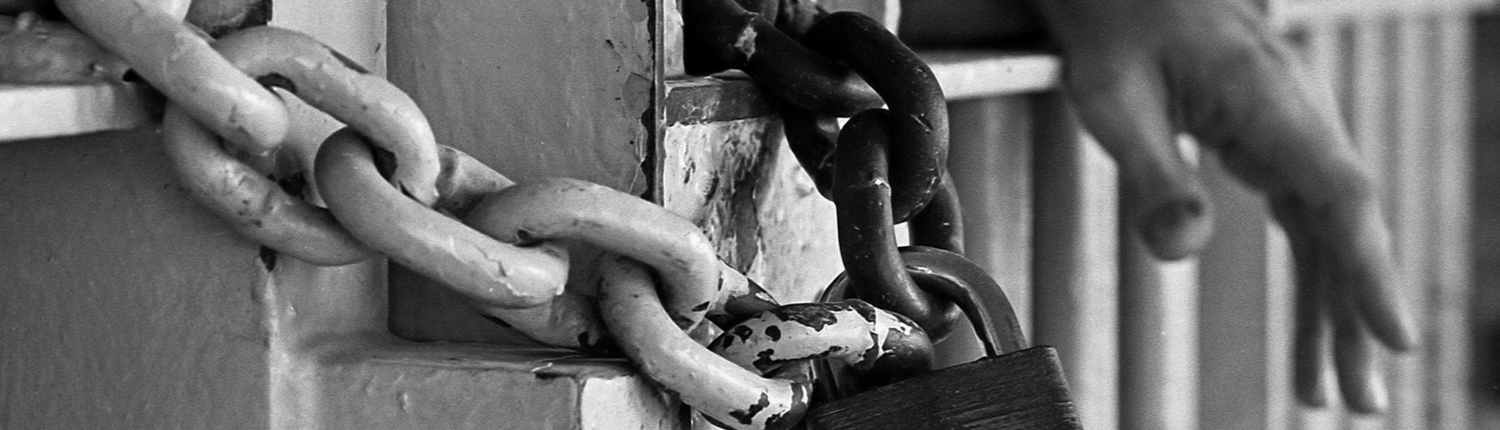
Roberto Cruz was ensnared in a system that has some of the country’s harshest sentences and lowest weight thresholds for marijuana offenses, Jefferson County Judge Stephen Wallace found, when he resentenced Mr. Cruz to time served.

The State’s primary evidence, according to Jefferson County Circuit Judge Stephen Wallace’s order: “[C]ircumstantial evidence suggesting that since the defendant was a passenger in the vehicle and marijuana has a strong odor, then he must have known about the drugs.”

At trial in 2005, Mr. Cruz’s attorney offered no mitigating evidence nor objection to the State’s use of prior convictions from 1985 to enhance his sentence under the Habitual Felony Offender Act. It took almost 16 years for the Alabama justice system to correct this error. Turns out, the State was not permitted to use those old convictions, all of which were drug crimes stemming from a single incident in Georgia.  Well-established Alabama case law excludes drug convictions prior to 1987 for use in HFOA sentencing because drug crimes had their own recidivist statute until then. But no one in Judge Gloria Bahakel’s Jefferson County courtroom 15 years ago could be bothered to point that out.

The story of how this error got corrected speaks volumes about the frailties in Alabama’s justice system and the harm done to defendants without access to money. The Alabama Court of Criminal Appeals affirmed the conviction and sentence.  Incarcerated and without the benefit of counsel, Mr. Cruz filed post-conviction petitions that went nowhere. Then investigators with the Southern Poverty Law Center discovered his case while researching marijuana trafficking cases. They put Mr. Cruz’s plight on the radar of Jefferson County Public Defender Adam Danneman, who vigorously took on the case.

Judge Wallace’s order, most importantly, provides immediate release to a 71-year-old man who has no business at Donaldson prison. But it goes further in pointing out the “disturbing” reality that Alabama is still sending people to prison forever for marijuana, a substance legal in 11 states, and decriminalized in 16 more. “Commercial distribution of cannabis is allowed in all jurisdictions where it has been legalized, except for Vermont and the District of Columbia,” he wrote.  Even in the surrounding southern states of Georgia, Florida, and Tennessee, Alabama’s weight threshold for a trafficking conviction – greater than 2.2 pounds – is way out of line.

“Judge Wallace’s order hits the nail on the head. We have the lowest thresholds and the harshest punishments in the country for marijuana in this state,” Mr. Danneman told me. “Regardless of how you feel about the legalization/decriminalization of weed, 15 plus years in prison is a shockingly harsh punishment. I’m glad we were able to do something about it.”

Appleseed and the Southern Poverty Law Center focused on Alabama’s harsh marijuana laws in our report, Alabama’s War on Marijuana: Accessing the Fiscal and Human Toll of Criminalization. We found that marijuana enforcement costs Alabama taxpayers $22 million per year, a cost worth examining given the enormous state budget shortfalls anticipated by the COVID-related economic downturn and court closures.

The human costs are much worse.

In leaving prison as an older person once sentenced to die there, Mr. Cruz is in good company.  Within the last year, 72-year-old Geneva Cooley and 58-year-old Alvin Kennard have walked free, in large part because of Jefferson County judges and prosecutors who were unafraid to take a second look at how the mistakes of our past are wasting lives and hurting people.  Like Mr. Cruz, Ms. Cooley’s LWOP sentence was for drug trafficking.

Mr. Kennard at his Bessemer home a few months after his release from prison. Photo by Bernard Troncale

Mr. Kennard was my client and I still see him on a regular basis. Within 6 weeks of release, he secured a job at a car dealership. He talks about going to work like it’s the best thing that ever happened to him. Work, family, and church are his priorities.  In fact, Mr. Kennard and Bessemer District Attorney Lynniece Washington attend the same church. And she is fine with that, she once told me. After all, she saw no purpose in opposing Mr. Kennard’s resentencing. He had served 36 years for a $50 robbery.

But there are so many more like them. According to data from the Alabama Sentencing Commission that Judge Wallace included in his order, 22 people in Alabama are serving sentences of Life Without Parole for drug convictions, 255 for robbery – all crimes that require no physical injury for a conviction.  But under Alabama’s Habitual Felony Offender Act, that does not matter.

More than 100 of these people are over 60 years old. As COVID-19 spreads through the Alabama Department of Corrections, with now 25 confirmed cases among staff and incarcerated people, the potential consequences of these sentencing decisions become more fraught.

We celebrate with Roberto Cruz. And still we search for the ways Alabama’s criminal punishment system will somehow provide justice to the many others like him.

For a full account of Mr. Cruz’s case, please read Kathryn Casteel’s detailed report from the Southern Poverty Law Center.
By Akiesha Anderson, Appleseed Policy Director

On March 30th, Alabama Appleseed sent a letter to Dr. Scott Harris—Director of the Alabama Department of Public Health (ADPH), and Brian Hastings—Director of the Alabama Department of Emergency Management (ADEM), urging their agencies to share with Appleseed and the general public their plans to ensure that COVID-19 testing sites would be set up in every county throughout the Black Belt.

What factors motivated the decision to send this letter?

The answer for this is simple, I care about the plights and difficulties that affect us, as a community and society.

It is very well understood that we are all navigating the struggles associated with combating COVID-19  as a society. In the recent weeks, there have been national, state, and local conversations about the disproportionate impact that COVID-19 has had on Black communities with the understanding that this is tied into inequality in our health care system. Although these conversations about how racism and bias negatively impact how Black people in America receive access to healthcare are not new, they remain essential. It is also essential that as we have these conversations, we delve exploring the intersectionality of race, poverty, gender, and geography.

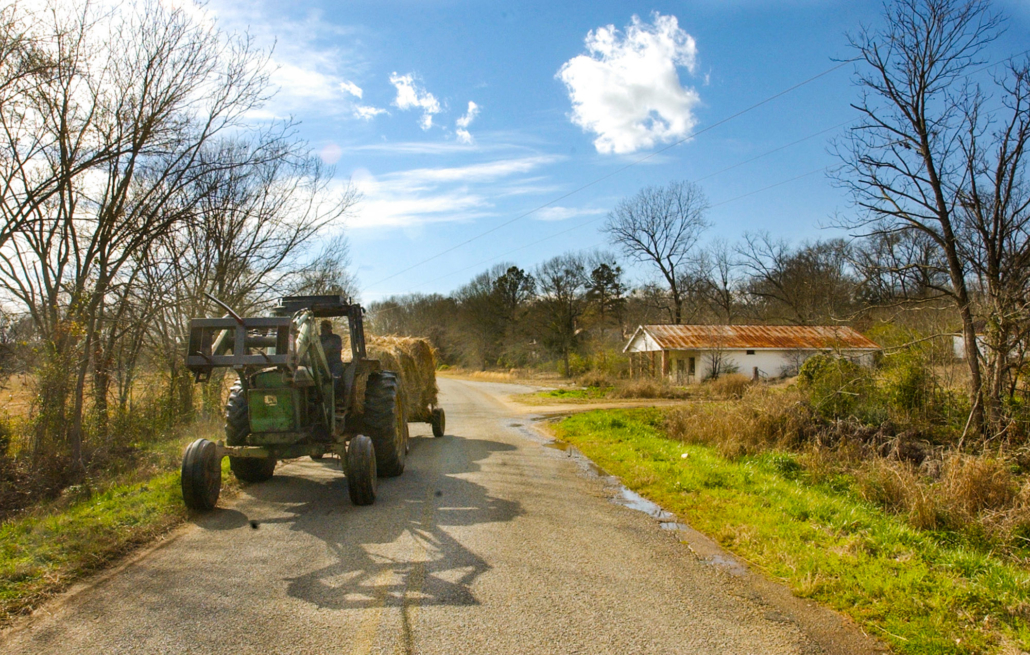
A farmer hauls hay in Lowndes County, one of the poorest counties in the nation. Photo Bernard Troncale

At the time the letter was sent, there were a total of 831 confirmed COVID-19 cases throughout the state, and the first case of COVID-19 had been confirmed in Alabama only 10 days prior. While it was admirable to see that within 10 days the state was able to test nearly 1000 Alabamians, it was concerning to know that although 13% of all tests had resulted in a positive case, less than 1% of those positive cases were found in the Black Belt.

According to 2019 Census data, residents of the Black Belt counties make up 11% of Alabama’s population. Census data also reveals that the Black Belt has a higher percentage of both Black and poor residents that the statewide average. Given reports of testing shortages generally, the limited information gleaned from ADPH data, historical context, and the demographics of the Black Belt, it seemed unlikely at the time, that the state was disseminating the same resources to the Black Belt as they were other communities.

What did we learn in the weeks immediately after sending the letter?

Within just a few hours of receiving our letter, Director Hastings shared that it was his belief that plans were in place to expand testing throughout the Black Belt. This sentiment was repeated by elected officials and leaders throughout the coming weeks, as I continued to inquire about when testing sites would expand throughout the region. In lieu of permanent testing sites, many Black Belt counties have relied on mobile testing sites in an effort to increase testing. Over the past weeks, several Black Belt counties set-up these mobile sites at the County Health Departments.

In early April, ADPH employees revealed that there was no clear plan with regard to how often any of the mobile sites would return to each county. In Wilcox County, for example, an employee at the County Health Department shared with me that they were unsure whether the mobile testing sites would be returning every week or on a case-by-case basis. However, the employee feared it would be the latter.

In addition to barriers to testing created by such infrequencies, testing within these counties was seemingly somewhat inaccessible to Black Belt residents for several other reasons. For example, due to the limited amount of tests distributed throughout the state, health departments within the Black Belt indicated that they were using specific and narrow criteria to pre-screen patients beforehand to determine who could receive testing. Specifically, the county health departments reportedly were only testing people that BOTH (a) had a doctor’s referral and (b) met the following criteria: (1) were symptomatic with a fever, cough, shortness of breath AND were either (1) 65 or older, (2) a health care worker, or (3) someone with an underlying health condition that makes them immunocompromised/at higher risk.

These criteria were troubling for numerous reasons. While this criteria might have seemed normal and like an appropriate way to determine how to prioritize the allocation of limited resources/tests, such criteria essentially meant that many Black Belt residents would be considered ineligible for testing at the State Department of Health sites. Worth noting first, this criteria was stricter than the criteria outlined on the ADPH website. That suggests that as a matter of unofficial policy implementation, Black Belt residents might have had a harder time accessing tests than members of other communities throughout the state.  Secondly, as previously discussed, there are a number of characteristics unique to rural, Black Belt, and poor communities that likely made these criteria more harmful than helpful. For example, considering the historic disinvestment in rural and Black Belt counties it is possible that Black Belt residents are less likely to have access to a doctor that is able to give them a referral. Also, for those who  do have access to a doctor, research has long shown how racism and bias plays out in the healthcare system, so minority and poor people are also at the mercy of whether or not a doctor even believes them or finds them credible or worthy enough of receiving an exam. Similarly, due to healthcare shortages and vulnerabilities that have existed long before COVID, it is also likely that members of Black Belt communities may have undiagnosed health  conditions that they are unaware of simply because they don’t have the same access to healthcare professionals as members of other communities do.

Has testing in the Black Belt improved in the past month?

Although the Black Belt still lacks permanent testing sites within eight of its ten counties, in the month since Appleseed wrote to Dr. Harris, testing capacity and rates have risen. Within the last two weeks for example, testing of Black Belt residents has nearly doubled—as tests administered to Black Belt residents rose from a total of 4645 on April 21st to a total of 8362 on May 1st. Despite the fact that testing throughout the state of Alabama remains low—less than 2% of the state’s population has been tested— testing amongst Black Belt residents is beginning to reach parity with State-wide rates, have gotten closer to reaching parity with statewide rates. As of May 1st, approximately 1.5% of the Black Belt has been tested for COVID-19. However, as Black Belt testing increases, we are beginning to witness the opposite problem of what was seen weeks ago, when Black Belt residents seemed to be underrepresented when assessing positive test results. In contrast, as testing increases, we are beginning to witness Black Belt residents are becoming overrepresented with regard to positive test results. Although Black Belt residents make up 11% of Alabama’s population, they now make up 16% of the COVID-19 positive test results.

What does this increase in positive COVID-19 cases within the Black Belt reveal?

It is no secret that there have been numerous challenges that the state Department of Health and other state leaders have had to navigate since the first coronavirus case was confirmed in Alabama. However, the recent rate at which new cases have been confirmed within the Black Belt suggests that the previously low number of confirmed cases likely resulted from simply a lack of testing rather than a lack of occurrences. Given this possibility along with the State’s decision to slowly reopen the state by rolling back both social distancing and business restrictions; it is possible that the state may not be able to increase testing in enough time to detect and prevent spread of existing COVID-19 cases in the area.

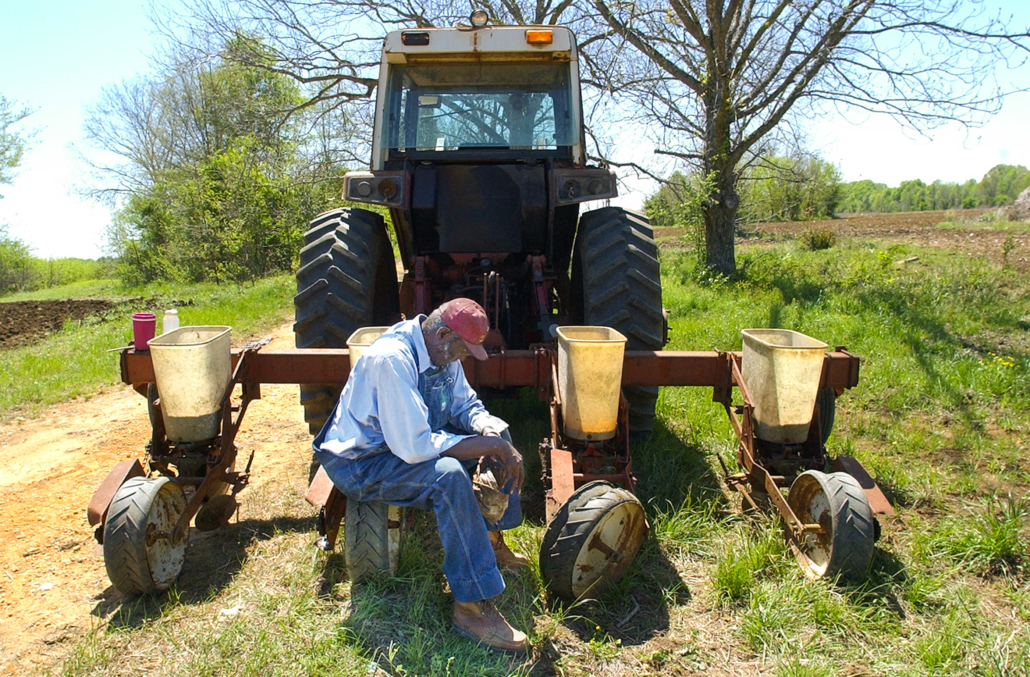
A 71-year-old farmer in Perry County, Alabama waiting on parts to fix a broke tractor. Photo Bernard Troncale

Something to Ponder

Every policy, action or inaction by a public official or governmental institutions is ultimately a decision that tells us something about what people, communities, and beneficiaries said actors both prioritize and deprioritize. Which communities get allocated resources, how quickly, and how many resources has long been deeply inequitable and oft-times exclusionary process. As leaders continue to make decisions about the allocation of resources during this epidemic, we should be vigilant to fight against the inequities that race, class, and nepotism can create. Because policy makers and public officials routinely sacrifice some people for the perceived “greater good” of others, we must continue to challenge who we allow decisionmakers to  deem as “disposable”.

Alabama Appleseed’s mission of justice and equity for all Alabamians compels us to do so. Given what’s at stake with this pandemic, this mission is more urgent that ever.